QGraphicsEffectclass is the base class for all graphics effects. 更多 …

继承者: QGraphicsBlurEffect , QGraphicsColorizeEffect , QGraphicsDropShadowEffect , QGraphicsOpacityEffect
4.6 版新增。
def
boundingRect
()
def
drawSource
(painter)
def
isEnabled
()
def
sourceBoundingRect
([system=Qt.LogicalCoordinates])
def
sourceIsPixmap
()
def
sourcePixmap
([system=Qt.LogicalCoordinates[, offset=None[, mode=PadToEffectiveBoundingRect]]])
def
updateBoundingRect
()
def
boundingRectFor
(sourceRect)
def
draw
(painter)
def
sourceChanged
(flags)
def
setEnabled
(enable)
def
update
()
def
enabledChanged
(enabled)
Effects alter the appearance of elements by hooking into the rendering pipeline and operating between the source (e.g., a
QGraphicsPixmapItem) and the destination device (e.g.,QGraphicsView‘s viewport). Effects can be disabled by callingsetEnabled(false). If effects are disabled, the source is rendered directly.To add a visual effect to a
QGraphicsItem, for example, you can use one of the standard effects, or alternately, create your own effect by creating a subclass ofQGraphicsEffect. The effect can then be installed on the item usingsetGraphicsEffect().Qt provides the following standard effects:
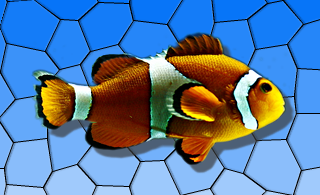
QGraphicsBlurEffect- blurs the item by a given radius
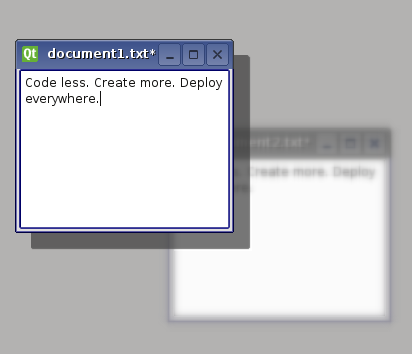
QGraphicsDropShadowEffect- renders a dropshadow behind the item
QGraphicsColorizeEffect- renders the item in shades of any given color
QGraphicsOpacityEffect- renders the item with an opacity
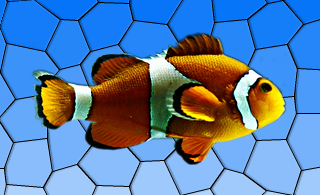
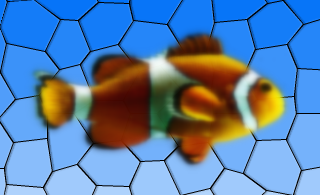
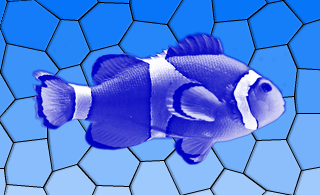
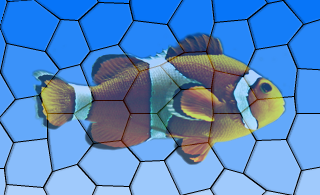
For more information on how to use each effect, refer to the specific effect’s documentation.
To create your own custom effect, create a subclass of
QGraphicsEffect(or any other existing effects) and reimplement the virtual functiondraw(). This function is called whenever the effect needs to redraw. Thedraw()function takes the painter with which to draw as an argument. For more information, refer to the documenation fordraw(). In thedraw()function you can callsourcePixmap()to get a pixmap of the graphics effect source which you can then process.If your effect changes, use
update()to request for a redraw. If your custom effect changes the bounding rectangle of the source, e.g., a radial glow effect may need to apply an extra margin, you can reimplement the virtualboundingRectFor()function, and callupdateBoundingRect()to notify the framework whenever this rectangle changes. The virtualsourceChanged()function is called to notify the effects that the source has changed in some way - e.g., if the source is aQGraphicsRectItemand its rectangle parameters have changed.
QGraphicsEffect
(
[
parent=None
]
)

- param parent
QObject
构造新
QGraphicsEffect
instance having the specified
parent
.
PySide2.QtWidgets.QGraphicsEffect.
ChangeFlag

This enum describes what has changed in QGraphicsEffectSource.
|
常量 |
描述 |
|---|---|
|
QGraphicsEffect.SourceAttached |
The effect is installed on a source. |
|
QGraphicsEffect.SourceDetached |
The effect is uninstalled on a source. |
|
QGraphicsEffect.SourceBoundingRectChanged |
The bounding rect of the source has changed. |
|
QGraphicsEffect.SourceInvalidated |
The visual appearance of the source has changed. |
PySide2.QtWidgets.QGraphicsEffect.
PixmapPadMode

This enum describes how the pixmap returned from
sourcePixmap
should be padded.
|
常量 |
描述 |
|---|---|
|
QGraphicsEffect.NoPad |
The pixmap should not receive any additional padding. |
|
QGraphicsEffect.PadToTransparentBorder |
The pixmap should be padded to ensure it has a completely transparent border. |
|
QGraphicsEffect.PadToEffectiveBoundingRect |
The pixmap should be padded to match the effective bounding rectangle of the effect. |
PySide2.QtWidgets.QGraphicsEffect.
boundingRect
(
)

QRectF
Returns the effective bounding rectangle for this effect, i.e., the bounding rectangle of the source in device coordinates, adjusted by any margins applied by the effect itself.
PySide2.QtWidgets.QGraphicsEffect.
boundingRectFor
(
sourceRect
)

sourceRect
–
QRectF
QRectF
Returns the effective bounding rectangle for this effect, given the provided
rect
in the device coordinates. When writing you own custom effect, you must call
updateBoundingRect()
whenever any parameters are changed that may cause this this function to return a different value.
另请参阅
PySide2.QtWidgets.QGraphicsEffect.
draw
(
painter
)

painter
–
QPainter
This pure virtual function draws the effect and is called whenever the source needs to be drawn.
Reimplement this function in a
QGraphicsEffect
subclass to provide the effect’s drawing implementation, using
painter
.
例如:
def draw(self, painter):
    # ...
    offset = QPoint()
    if self.sourceIsPixmap():
        # No point in drawing in device coordinates (pixmap will be scaled anyways).
        pixmap = sourcePixmap(Qt.LogicalCoordinates, offset)
        ...
        painter.drawPixmap(offset, pixmap)
    else:
        # Draw pixmap in device coordinates to avoid pixmap scaling
        pixmap = sourcePixmap(Qt.DeviceCoordinates, offset)
        painter.setWorldTransform(QTransform())
        # ...
        painter.drawPixmap(offset, pixmap)
    # ...
This function should not be called explicitly by the user, since it is meant for reimplementation purposes only.
PySide2.QtWidgets.QGraphicsEffect.
drawSource
(
painter
)

painter
–
QPainter
Draws the source directly using the given
painter
.
This function should only be called from
draw()
.
例如:
def draw(self, painter):
    # Fully opaque draw directly without going through a pixmap.
    if qFuzzyCompare(self.opacity, 1):
        drawSource(painter)
        return
    # ...
另请参阅
PySide2.QtWidgets.QGraphicsEffect.
enabledChanged
(
enabled
)

enabled
–
bool
PySide2.QtWidgets.QGraphicsEffect.
isEnabled
(
)

bool
PySide2.QtWidgets.QGraphicsEffect.
setEnabled
(
enable
)

enable
–
bool
另请参阅
PySide2.QtWidgets.QGraphicsEffect.
sourceBoundingRect
(
[
system=Qt.LogicalCoordinates
]
)

system
–
CoordinateSystem
QRectF
Returns the bounding rectangle of the source mapped to the given
system
.
调用此函数采用
DeviceCoordinates
outside of
draw()
will give undefined results, as there is no device context available.
另请参阅
PySide2.QtWidgets.QGraphicsEffect.
sourceChanged
(
flags
)

flags
–
ChangeFlags
此虚拟函数被调用由
QGraphicsEffect
to notify the effect that the source has changed. If the effect applies any cache, then this cache must be purged in order to reflect the new appearance of the source.
flags
describes what has changed.
PySide2.QtWidgets.QGraphicsEffect.
sourceIsPixmap
(
)

bool
返回
true
if the source effectively is a pixmap, e.g., a
QGraphicsPixmapItem
.
This function is useful for optimization purposes. For instance, there’s no point in drawing the source in device coordinates to avoid pixmap scaling if this function returns
true
- the source pixmap will be scaled anyways.
PySide2.QtWidgets.QGraphicsEffect.
sourcePixmap
(
[
system=Qt.LogicalCoordinates
[
,
offset=None
[
,
mode=PadToEffectiveBoundingRect
]
]
]
)

system
–
CoordinateSystem
offset
–
QPoint
mode
–
PixmapPadMode
QPixmap
Returns a pixmap with the source painted into it.
system
specifies which coordinate system to be used for the source. The optional
offset
parameter returns the offset where the pixmap should be painted at using the current painter. For control on how the pixmap is padded use the
mode
参数。
The returned pixmap is clipped to the current painter’s device rectangle when
system
is
DeviceCoordinates
.
调用此函数采用
DeviceCoordinates
outside of
draw()
will give undefined results, as there is no device context available.
另请参阅
PySide2.QtWidgets.QGraphicsEffect.
update
(
)

Schedules a redraw of the effect. Call this function whenever the effect needs to be redrawn. This function does not trigger a redraw of the source.
另请参阅
PySide2.QtWidgets.QGraphicsEffect.
updateBoundingRect
(
)

This function notifies the effect framework when the effect’s bounding rectangle has changed. As a custom effect author, you must call this function whenever you change any parameters that will cause the virtual
boundingRectFor()
function to return a different value.
This function will call
update()
if this is necessary.
